
The week's losses wiped out investor wealth worth Rs 18.43 trillion, with the total market capitalisation of BSE-listed firms now at Rs 441 trillion.

Sanjay Malhotra takes charge as the 26th RBI governor at a time when headline retail inflation has shot up to 6.2%.

'We have seen something do very well when the times are good but maybe not as well when the times are bad.'

At a time when banks are finding it challenging to mobilise resources, State Bank of India (SBI)-the country's largest lender-has devised a three-pronged strategy to boost deposit accretion. First is an aspirational product that promises to make depositors lakhpatis by helping them grow their deposits to Rs 1 lakh through recurring deposit (RD) schemes.

While liquidity in the banking system has turned surplus in the last few weeks, it could go back to deficit again, mainly due to corporate advance tax outflows. The net liquidity surplus of the banking system rose to touch Rs 1 trillion on Tuesday on the back of government spending, according to the data released by the Reserve Bank of India.
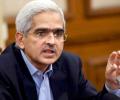
The December meeting of the Reserve Bank of India's (RBI's) six-member Monetary Policy Committee (MPC) will start on Wednesday even as there is no clarity on whether Governor Shaktikanta Das, the chair of the panel, will continue in office after his term ends next week. The outcome of the meeting will be announced on Friday by Das at 10 in the morning.

Despite gross domestic product (GDP) growth being lower-than-expected for the July-September quarter, the six-member Monetary Policy Committee (MPC) may not cut the policy repo rate in the review meeting scheduled for next week due to high inflation in October, according to experts. "Consumer Price Index (CPI) inflation breaching the upper limit of the RBI's tolerance band in October (6.2 per cent year-on-year) is not a favourable backdrop for the MPC to commence the easing cycle, even as the growth outcome disappointed the MPC's expectations," said Shreya Sodhani, regional economist at Barclays, who expects the policy repo rate to be kept unchanged in the December meeting.

'Within India, people want high-quality, personalised banking services, and the demand for such services has exploded.'
Infrastructure bond issuances by commercial banks in the current financial year (FY25) are likely to surpass Rs 1 trillion, almost double that of FY24, market participants said. So far this financial year, banks have raised Rs 74,256 crore via infra bonds. In FY24, the total issuances stood at around Rs 51,081 crore.

The Indian rupee is likely to depreciate further against the US dollar through the end of 2024. This is due to the continued strengthening of the greenback, combined with the weakening of the Chinese yuan, which is expected to keep pressure on the Indian currency.

State Bank of India (SBI), India's largest lender, is looking to raise Rs 10,000 crore through 15-year infrastructure bonds as early as next week, said multiple sources aware of the development. Market participants expect a coupon in the range of 7.15-7.18 per cent for SBI's upcoming infrastructure bond issuance. This comes as demand for longer-tenor papers has remained strong in recent domestic capital market offerings.
Private sector bank board members have urged the Reserve Bank of India (RBI) top brass to consider workload management of the boards as they feel there are too many issues that go to the boards for approval and the situation becomes unmanageable at times. The views were conveyed to the regulator on Monday in a conference of directors of private sector bank boards on the theme "Transformative Governance Through Sound Boards". RBI governor Shaktikanta Das, deputy governors Swaminathan J and M Rajeshwar Rao, and other senior officials of the central bank participated in the conference.

Even as the high inflation figure for October has ruled out any possibility of a rate cut by the Reserve Bank of India's (RBI's) monetary policy committee (MPC) in December, a rate cut in February also looks uncertain due to global uncertainties. Economists told Business Standard that unless domestic growth slows markedly, the outlook on rate cut remains unclear. India's headline inflation touched a 14-month high of 6.2 per cent in October, breaching the MPC's upper tolerance band of 6 per cent.

A Rs 525-crore contingency provision during the July-September period led to a 19 per cent fall in IndusInd Bank's share price on Friday (October 25). Contingency provisions are generally made when a lender expects more bad loans in the coming quarters. Shares of the bank on Tuesday (October 29) declined 1.53 per cent to settle at Rs 1,038.2 apiece on the BSE.

Foreign investors were net sellers of domestic debt in October for the first time since the official inclusion of Indian government bonds in the JP Morgan bond indices, with net outflow worth Rs 4,697 crore. This marked the second instance in the current calendar year where foreign portfolio investors (FPIs) were net sellers in a month.
The Reserve Bank of India (RBI) was a net seller of the US dollar in August, reversing its net buying position from July. During the current financial year up to August, the central bank had sold a net $1.11 billion. The RBI sold a net total of $6.49 billion worth of the foreign currency in August, according to the central bank's monthly bulletin.

The Reserve Bank of India's (RBI's) State of the Economy report for October acknowledged a slowdown in some high-frequency indicators but expressed confidence in a recovery, aided by consumption demand during the festival season. "In India, aggregate demand is poised to shrug off the temporary slowdown in momentum in the second quarter of 2024-25 as festival demand picks up pace and consumer confidence improves," said the report released on Monday.

After depreciating 0.32 per cent against the dollar in October so far, the rupee is expected to hold ground against the greenback in the current quarter on the back of robust inflows. According to the median of a Business Standard poll of 10 respondents, the rupee is seen trading around 84 per dollar till the end of December. "In India's case, at least the bond and cash related inflows will continue.
The Reserve Bank of India (RBI) has barred four non-banking finance companies (NBFCs), including two microfinance institutions (MFIs), from sanctioning and disbursing loans for charging exorbitant interest rates to the borrowers. These four entities are Asirvad Microfinance, Arohan Financial Services (also an MFI), DMI Finance, which provides personal, consumption, and micro, small and medium enterprises loans, and Flipkart co-founder Sachin Bansal's Navi Finserv, which offers home and personal loans. The ban will take effect on October 21 to "facilitate closure of transactions in the pipeline", the regulator said in a statement.

Partha Pratim Sengupta, who will be taking charge as the MD & CEO of Bandhan Bank in early November, has his task cut out. The Kolkata-based lender, which converted itself from a microfinance institution to a universal bank, is in its 10th year of operation. The bank was able to cut down the share of the micro loan book over these years.
 © 2026 Rediff.com - Investor Information - Advertise with us - Disclaimer - Privacy Policy - Sitemap - Feedback - About us - Terms of use - Grievances